RPOC vs SFOC: 2 Paths, 1 Clear Answer for Your Drone Work

In short
- An RPOC is a standing certificate for the operator. An SFOC is permission for an operation outside the standard rules.
- Lower-risk BVLOS needs a Level 1 Complex certificate plus an RPOC, and no SFOC.
- Anything outside that envelope still needs an SFOC, and holding an RPOC shortens every application.
Two acronyms come up the moment a drone business moves past ordinary line-of-sight work. One is a certificate about who you are as an operator. The other is permission for a particular flight. They get treated as rival options, and they are not. Most serious Canadian operators end up needing one for certain, and the other only sometimes.
This is the RPOC vs SFOC question answered properly: what each one is, which jobs need which, how they work together, and the least expensive compliant route for the work you actually want to do.
The short answer
| RPOC | SFOC | |
| Full name | RPAS Operator Certificate | Special Flight Operations Certificate, RPAS |
| What it is | Operator certificate required for Level 1 Complex operations, supported by the Division XII organizational framework | Permission for a specific operation that falls outside the Basic, Advanced and Level 1 Complex rules |
| How you get it | Submit an application in the Drone Management Portal that includes the required declaration, and pay the applicable fee | You apply, with a risk assessment and supporting documents, and Transport Canada decides |
| Fee (TC 2025 schedule) | $125 | $20 to $2,000 depending on complexity |
| Processing | Online service available immediately once the required application information and fee are provided | 30 business days for very-low and low; 60 business days for medium and high. Special aviation events: 20 business days |
| Duration | No expiry listed; stays in force while requirements are met | Authorized operation or operations, validity period and conditions |
| Reviewed when | After issuance, through compliance inspection | Before issuance, by an inspector |
| Needed for | All Level 1 Complex operations (lower-risk BVLOS) | Everything beyond the three certificate levels |
What an RPOC is
The RPAS Operator Certificate is the organizational half of complex drone operations. Transport Canada’s RPOC page puts it in one line: “Anyone who wants to conduct Level 1 Complex Operations needs to operate under an RPAS Operator Certificate (RPOC).” The pilot holds the Level 1 Complex certificate; the operator holds the RPOC; both are required for the flight.
To declare for one, an operator must have appointed an accountable executive, identified a person responsible for maintenance, implemented a training program, implemented standard operating procedures for flight, and implemented a process to manage safety risks. Those five requirements live in an operations manual, a maintenance control manual and a set of safety processes, structured to Advisory Circular 901-002.
Three facts about the RPOC that surprise people:
- An individual can hold one. Transport Canada’s page: “An RPOC can be held by an individual pilot, business or organization.” A solo operator can be their own accountable executive and person responsible for maintenance if the regulatory requirements for those roles are met.
- The issuance process is declaration-based rather than a pre-approval of the manuals. Transport Canada then states that it will conduct compliance inspections on RPOC holders. What that inspection checks is in RPOC Inspection: What Transport Canada Will Check.
- Foreign operators cannot hold an RPOC, though foreign pilots may conduct Level 1 Complex operations as an employee, agent or representative of a Canadian RPOC holder.
The full walkthrough of the certificate is What Is an RPAS Operator Certificate (RPOC)?. The document at the centre of it is covered in RPAS Operations Manual: What Transport Canada Expects.
What an SFOC is
The Special Flight Operations Certificate is the exception path. Transport Canada’s special operations page: “You need an SFOC-RPAS if you want to fly your drone beyond the rules for basic, advanced or Level 1 Complex operations.”
It is applied for for a defined proposed scope, and one application can cover several operations. A medium or high complexity application includes a Specific Operational Risk Assessment, operator and crew information, aircraft information and the other required supporting material. If issued, the certificate states the authorized type of operations, validity period and conditions.
Since November 4, 2025, every SFOC application carries a fee: $20 very low, $75 low, $900 medium, $2,000 high, with government emergency response organizations exempt. Confirm current amounts with Transport Canada.
When you need one and when you do not is in Do I Need an SFOC?. The process itself is in SFOC Application in Canada: Steps, Cost and Timelines.
RPOC vs SFOC: which one your job needs
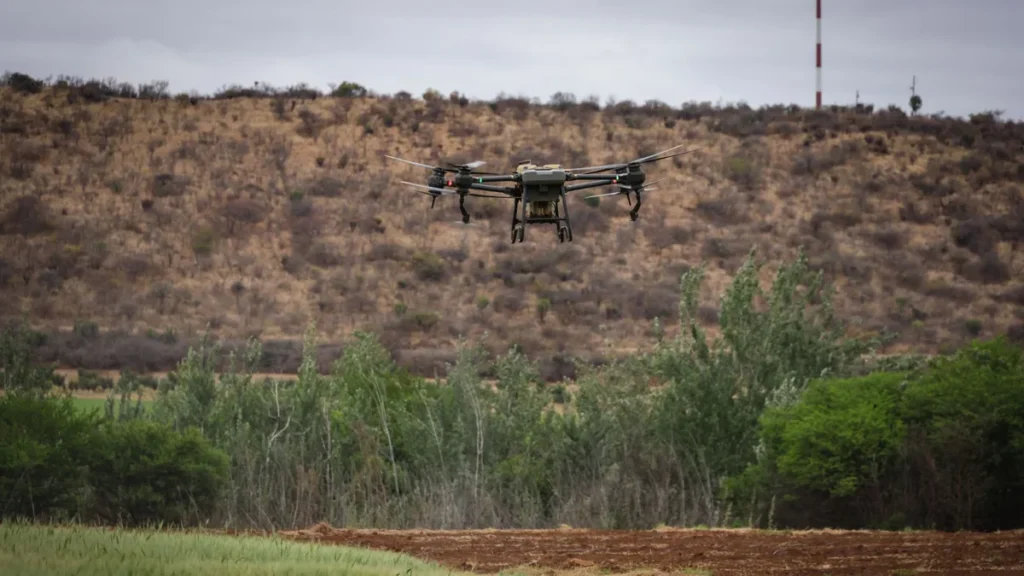
The decision is made by the job, not by preference. Here are the common ones.
| The job | What it is under the rules | What you need |
| Mapping a pipeline or transmission corridor BVLOS, uncontrolled, at or below 400 ft, meeting a CAR 901.87 population pathway and aerodrome-distance limits | Level 1 Complex | Level 1 Complex certificate + RPOC. No SFOC. |
| Inspecting a structure by flying behind it while standing nearby | Advanced (sheltered operation) | Advanced certificate. See Sheltered Operations in Canada. |
| Flying beyond your sight with a trained visual observer keeping the drone in view | Advanced (extended VLOS) | Advanced certificate. See Understanding Extended VLOS. |
| BVLOS near a populated area, or BVLOS in controlled airspace | Near populated: may be 901.87(b). Controlled: outside Level 1 Complex | Use the 901.87(b) route if all conditions are met; controlled-airspace BVLOS requires a high complexity SFOC. |
| Above the normal CAR 901.25 altitude limits | Usually outside standard rules | Medium SFOC unless an Advanced controlled-airspace operation is specifically authorized above the limits under 901.71(2). |
| More than one RPA BVLOS at once from a single control station | Outside all three levels | Medium complexity SFOC. |
| Agricultural spraying with a medium RPA within line of sight | Advanced only if payload and operation qualify | Advanced only if the payload does not trigger CAR 901.43 and all Advanced conditions are met; otherwise SFOC. |
| Agricultural spraying BVLOS over rural farmland | Potential Level 1 Complex | Level 1 Complex only if the 901.87 pathway and all other conditions are met and the payload does not trigger 901.43; otherwise SFOC. |
| Aerial footage within 30 metres of a festival or sporting event | Advertised event | Low complexity SFOC, even for a microdrone. See SFOC Now Required for Microdrones at Advertised Events. |
| Flying by a foreign pilot or with a foreign-owned or unregistered RPA | Foreign | Foreign SFOC may be required; exceptions apply, including a foreign employee, agent or representative operating under a Canadian RPOC holder. |
The pattern is clear once it is laid out. The RPOC is not an alternative to an SFOC; it is the operator certificate required for Level 1 Complex operations. It removes the need for an SFOC only when the particular operation independently fits the Level 1 Complex rules, and it can simplify the organizational setup for later SFOC applications.
The Level 1 Complex envelope, precisely
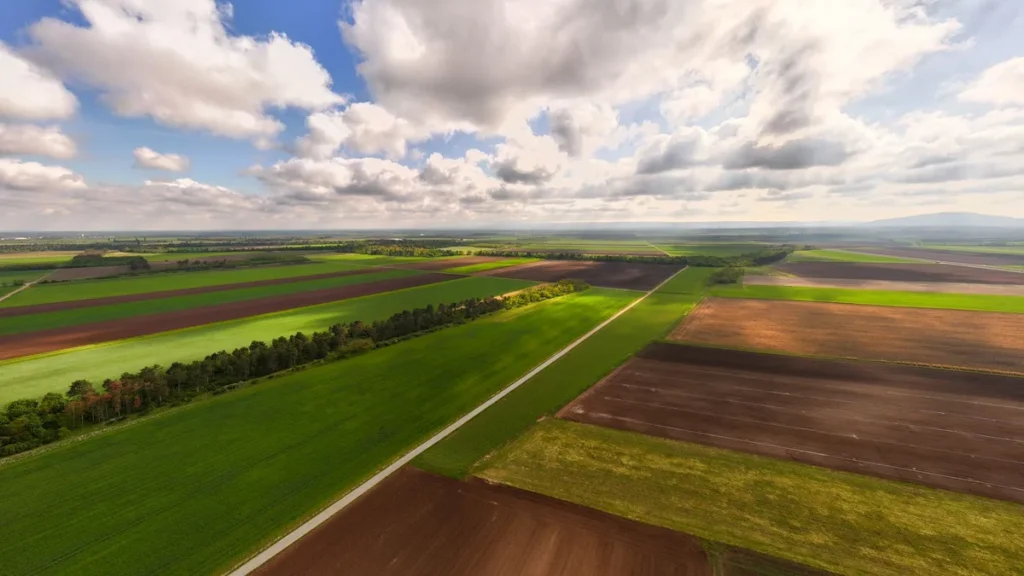
Because so much rides on whether a job fits inside it, here is the envelope as Transport Canada’s Level 1 Complex page describes it:
- A small or medium RPA with the required declaration may conduct BVLOS in uncontrolled airspace at least 1 km from a populated area under CAR 901.87(a).
- A small RPA with the required pre-validated declaration may conduct BVLOS in uncontrolled airspace over a sparsely populated area or less than 1 km from a populated area under CAR 901.87(b).
- Uncontrolled airspace only.
- At or below 400 feet above ground level.
- More than 9.3 km (five nautical miles) from the centre of an aerodrome.
And the condition that catches operators with the common enterprise aircraft: if the RPAS does not use a declaration against Standard 922.10, the operation must fit an allowed alternative. Vision-based detect and avoid under Standard 923 uses a visual observer; separately, the Standard 922 table also removes the 922.10 declaration requirement for qualifying atypical-airspace operations. Plan the crew accordingly.
To get the pilot certificate you need to be 18, hold the Advanced exam, complete 20 hours of ground school through a flight school, pass the Level 1 Complex exam ($50) and pass a Level 1 Complex flight review. The certificate fee is $125. Our instructor-led Level 1 Complex ground school covers the 20 hours for $99, and the review is described in Level 1 Complex Flight Review in Canada.
How the two work together
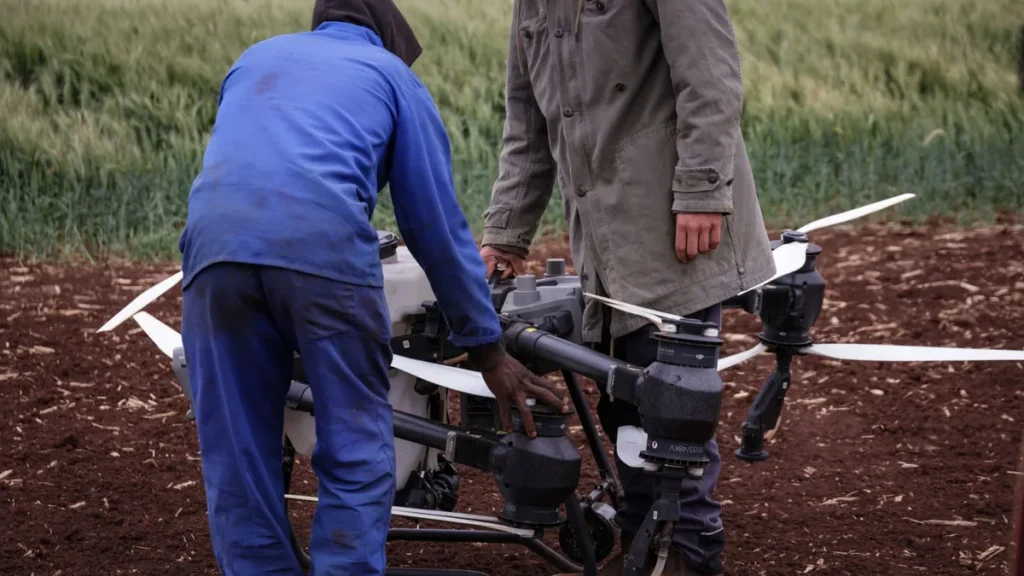
Transport Canada’s medium and high complexity SFOC page lists five organizational items to establish before applying, then says an RPOC holder may skip that setup step and provide the RPOC number. The applicable SFOC compliance-checklist and supporting-document requirements still remain.
That is the relationship: the RPOC maintains the operator framework every day, while an SFOC application still has to substantiate the specific proposed operation. Holding the RPOC avoids rebuilding the listed organizational setup, but it is not a substitute for the operation-specific risk assessment and other supporting evidence required by the applicable checklist.
So the sequence most operators settle into is:
- Advanced certificate, which covers most line-of-sight work including sheltered and extended VLOS operations.
- Level 1 Complex certificate plus an RPOC, which permits lower-risk BVLOS only when each operation fits the applicable Division VI pathway and conditions.
- An SFOC when a proposed operation falls outside those rules, with the RPOC satisfying the listed organizational-setup step where applicable.
What the numbers say about timing
Transport Canada’s Drone Zone newsletter reported, as of August 13, 2026, 23,427 Advanced pilot certificates, 709 Level 1 Complex certificates and 615 active RPOCs. That is about three percent of Advanced pilots who have taken the step up, in a framework that has been open since 2025.
Transport Canada’s own regulatory analysis for those rules estimated the revenue of a BVLOS flight at $1,468 against $873 for an Advanced flight, and projected that the largest share of the benefits would go to commercial operators. Those are Transport Canada’s figures and assumptions, not a promise about your market. They are, though, the reason the RPOC vs SFOC question is worth settling now rather than when the tender lands.
Want the route for your specific work? Email info@rpascentre.com with the job you are trying to win. The first consult is free.
Frequently asked questions
What is the difference between RPOC and SFOC? An RPOC is a certificate held by an operator, issued on a declaration that the operator has the required structure (accountable executive, manuals, training, safety processes). An SFOC is permission for a specific operation outside the standard rules, applied for per operation and decided by Transport Canada.
Do I need an RPOC or an SFOC for BVLOS? Lower-risk BVLOS can be Level 1 Complex under either CAR 901.87(a) or 901.87(b), provided the operation is in uncontrolled airspace and all other Division VI conditions are met. That requires a Level 1 Complex pilot certificate and operation under an RPOC. BVLOS outside the applicable Level 1 Complex pathways requires an SFOC.
Can I get an SFOC without an RPOC? Yes. Without an RPOC, you establish the organizational items listed by Transport Canada before applying and submit the applicable supporting documents. An RPOC lets you skip that organizational-setup step and provide the RPOC number, but it is not mandatory for every SFOC.
Is an RPOC worth it for a solo operator? If you want to do any Level 1 Complex work, it is required, and an individual can hold one. The obligations are real: an operations manual, a maintenance control manual, training and maintenance records, and readiness for inspection. Transport Canada’s own advice is to be sure it is “necessary and worth the burden it bears.”
How much does an RPOC cost compared with an SFOC? The RPOC fee is $125 on Transport Canada’s 2025 schedule. SFOC fees run from $20 to $2,000 by complexity. In both cases the fee is the smaller cost; the preparation of manuals, processes and, for an SFOC, the risk assessment is the real work.
Does an RPOC expire? Transport Canada’s RPOC page lists no expiry. The certificate stays in force while the holder continues to meet the requirements, and can be suspended or cancelled at the holder’s request if it is not being used.
Does an SFOC expire? Yes. An SFOC has a stated validity period, authorized type of operations and conditions. If a permitted item such as dates, location or validity period changes, the holder may apply for an amendment under CAR 903.02.1; a proposed operation outside the authorized scope may require a new application.
Can a company hold an RPOC and still need SFOCs? Yes, and many will. The RPOC covers Level 1 Complex operations on a standing basis; any job that steps outside that envelope, such as flying above 400 feet or BVLOS near an aerodrome, still needs an SFOC. The difference is that an RPOC holder supplies its RPOC number in place of the organizational half of the application.
Pick the route, then build it properly
The RPOC vs SFOC question has a clean answer for almost every job: the RPOC is the standing operator certificate required for Level 1 Complex operations, while the SFOC is the special-operations path for work that requires authority outside the standard Basic, Advanced or Level 1 Complex rules. The right path still depends on the facts of each operation.
RPOC and SFOC services: we build whichever one you need
Deciding the route takes an hour. Building the authorization is the work, and it is what we do alongside training. RPOC and SFOC consulting and build, from the first conversation through to an authorization that is compliant on paper and genuinely useful on site.
How it works
- A free 45-minute consult. You describe the work you want to win. We tell you whether it is Advanced, Level 1 Complex under an RPOC, an SFOC, or a sequence of them, and what each path will cost you in time.
- An intake built on Transport Canada’s own checklist. Nothing billable happens until it comes back and you have seen the scope in writing.
- The build. For an RPOC: the operations manual, the maintenance control manual, the safety processes and the training program, structured to Advisory Circular 901-002. For an SFOC: the risk assessment, the supporting manuals and the application, worked backwards from your operation date.
- Records an inspector can be shown. Training, maintenance and flight records set up in the RPAS Wilco app, so the paperwork and the evidence stay in step.
- Coaching so you own it. We walk you through your first amendments until keeping the manual current is routine rather than a project.
What we will not do. We will not hand you a template, because the regulation requires a manual that reflects how you actually operate, and an inspection finds the difference. And we will not promise you a Transport Canada outcome: TC decides every SFOC, and an RPOC is a declaration you make yourself. What we build is a declaration that holds up and an application that is complete.
There is no published price. The scope depends on what you already have, so you get a real number after the intake rather than a guess before it.
To book the consult, email info@rpascentre.com and tell us about the job you are trying to win. The contact page reaches the same inbox.
This is your moment.
Email info@rpascentre.com · Level 1 Complex Ground School, $99 · Do I need an SFOC?
A note on accuracy
Information in RPAS Centre blog posts is provided for general guidance only and reflects our understanding at the time of writing. Regulations, procedures, and operational practices change, so always verify requirements directly with Transport Canada, NAV CANADA, the relevant airport operator, or air traffic control before flying. Nothing on this blog constitutes legal, regulatory, or operational advice, and RPAS Centre is not liable for actions taken based on this content.
Spotted an inaccuracy? Please contact us.