Do I Need an SFOC? 3 Clear Questions for Canadian Pilots
In short
- You need an SFOC only when an operation falls outside the Basic, Advanced and Level 1 Complex rules: over 150 kg, above the altitude limits, or BVLOS outside the Level 1 Complex envelope, for example.
- Most commercial work, including medium drones within sight, sheltered operations and extended VLOS, needs a pilot certificate, not an SFOC.
- Lower-risk BVLOS runs on a Level 1 Complex certificate plus an RPOC, with no application per job.
You have a job in front of you. A corridor to map, a tower to inspect, a festival that wants aerial footage, a field on the far side of a treeline. Somewhere in the planning, the question lands: do I need an SFOC for this?
Since the 2025 rule changes, the honest answer is: less often than most pilots assume, and more often than a few of them hope. A lot of work that needed a Special Flight Operations Certificate for years now sits inside the Advanced or Level 1 Complex rules. Some work still needs one, and a couple of new cases were added.
This guide is the decision, laid out the way Transport Canada lays it out, so you can answer the question for your own operation in about five minutes.
What an SFOC is, in one paragraph
A Special Flight Operations Certificate for RPAS (SFOC-RPAS) is Transport Canada’s permission to fly a drone outside the standard rules. In Transport Canada’s own words, “you need an SFOC-RPAS if you want to fly your drone beyond the rules for basic, advanced or Level 1 Complex operations.” It covers a specific operation, under specific conditions, for a defined period. Transport Canada decides the outcome of every application, and since November 4, 2025, every application carries a fee.
That last clause is the key to the whole question. An SFOC is for what the rules do not already allow. So the real question is not “do I need an SFOC,” it is “does my operation fit inside Basic, Advanced, or Level 1 Complex?”
Do I need an SFOC? Three questions that settle it
1. Does your drone weigh less than 250 grams?
Microdrones sit outside most of Part IX. No certificate, no registration, and no SFOC for ordinary flying. There is one exception, added April 1, 2025: flying a microdrone at an advertised event (a concert, festival, market or sporting event that is promoted to the public) needs an SFOC. We covered that change in SFOC Now Required for Microdrones at Advertised Events.
2. Are you a Canadian citizen or permanent resident, flying a Canadian-registered drone?
Foreign pilots, operators and foreign-owned or unregistered drones may require a Foreign SFOC-RPAS, but exceptions apply. A foreign employee, agent or representative of a Canadian RPOC holder does not need one for that reason alone. Service standards vary by complexity.
3. Does what you want to do fit inside Basic, Advanced or Level 1 Complex?
This is the one that needs a list rather than a yes or no, and the next two sections are that list. The first one holds the operations that still need an SFOC. The second holds the ones that no longer do, with the certificate you need instead. Find the job you have in mind in one of them, and you have your answer.
Operations that still need an SFOC
Transport Canada sorts SFOC operations by complexity. The list below is quoted from the Get permission for special drone operations page.
| Complexity | Operation | Fee (per TC’s 2025 fee schedule) |
| Medium | Flying a drone that weighs more than 150 kg | $900 |
| Medium | Flying above the CAR 901.25 altitude limits * | $900 |
| Medium | Flying more than 5 RPA VLOS, or more than 1 RPA in a non-VLOS operation, from a single control station | $900 |
| High | Flying BVLOS other than sheltered operations, extended VLOS, and lower-risk BVLOS under Level 1 Complex | $2,000 |
| High | Flying a drone with dangerous or hazardous payloads | $2,000 |
| High | Flying BVLOS in an aerodrome environment | $2,000 |
| High | Flying a medium-sized drone in adverse weather or poor visibility | $2,000 |
| High | Flying with a person on board | $2,000 |
| Low | Flying at an advertised event | $75 |
| Very low / low | Non-commercial operation of an unregistered RPA; advertised-event operations | $20 / $75 |
* Except an Advanced operation in controlled airspace specifically authorized above those limits by the ATS provider under CAR 901.71(2).
Fee amounts are from Transport Canada’s 2025 summary of changes and apply from November 4, 2025. Government organizations involved in emergency response are exempt. Check the current amount with Transport Canada before you budget; fees are adjusted over time.
Medium and high complexity applications have a service standard of 60 business days once the application is complete and paid. High complexity applications received within 60 working days of the operation date are not accepted. If your job falls in one of the high complexity rows, the calendar matters as much as the paperwork. SFOC Application in Canada: Steps, Cost and Timelines walks through the whole process.
Operations that no longer need an SFOC
This is the part most pilots have not caught up with. Since 2025, all of the following are done under a pilot certificate, not an SFOC.
| What you want to do | Route | What you need |
| Fly a medium drone (25 kg to 150 kg) within visual line of sight | Advanced | Pilot Certificate, Advanced Operations |
| Fly behind a building or structure you are standing next to (sheltered operations) | Advanced | Advanced certificate; see Sheltered Operations in Canada |
| Fly beyond your own line of sight with a trained visual observer keeping the drone in view (EVLOS) | Advanced | Advanced certificate; see Understanding Extended VLOS |
| Fly lower-risk BVLOS under a CAR 901.87(a) or 901.87(b) pathway in uncontrolled airspace | Level 1 Complex | Level 1 Complex certificate and an RPAS Operator Certificate |
| Fly at night, within the Basic or Advanced rules | Basic or Advanced | The drone’s position lights on, per CAR 901.39 |
| Fly commercially at all | Basic or Advanced | No SFOC has been needed for commercial work since 2019 |
The 2025 changes are summarised in Understanding TP15530E: Why the New Drone Rules Are a Win for RPAS Pilots.
The route most operators miss: Level 1 Complex plus an RPOC
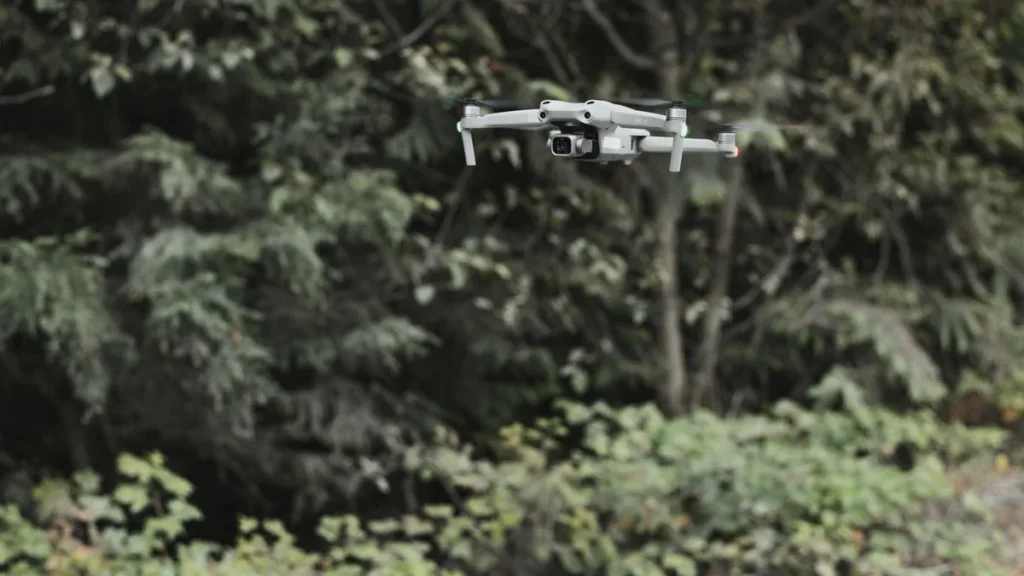
The row that changes the most business plans is lower-risk BVLOS. Under CAR 901.87(a), a small or medium RPA may be flown BVLOS in uncontrolled airspace at least 1 km from a populated area. Under 901.87(b), a small RPA may be flown BVLOS in uncontrolled airspace over a sparsely populated area or less than 1 km from a populated area, subject to the required PVD and the other Division VI conditions. Level 1 Complex operations also remain at or below 400 ft AGL and more than 5 NM from a listed aerodrome. See Transport Canada’s Level 1 Complex page.
If a BVLOS job fits the applicable Division VI pathway, no per-job SFOC is required. The pilot and operator still need the required certificates, and every operation must independently meet the applicable conditions:
- A Pilot Certificate, Level 1 Complex Operations. You need to be 18, hold the Advanced exam, complete 20 hours of ground school, pass the Level 1 Complex exam, and pass a Level 1 Complex flight review. The certificate fee is $125.
- An RPAS Operator Certificate (RPOC). The organizational half. Transport Canada’s page says plainly: “Anyone who wants to conduct Level 1 Complex Operations needs to operate under an RPAS Operator Certificate.” It is issued on a declaration, for a $125 fee, and can be held by an individual pilot, a business or an organization.
One condition to plan for: the RPAS must have the applicable Standard 922 declaration or PVD. If the operation does not use a 922.10 detect-and-avoid declaration, it must qualify for an allowed alternative: vision-based DAA under Standard 923 (using a visual observer) or atypical airspace under the Standard 922 exception.
We wrote up the pilot side in Level 1 Complex BVLOS Instructor-Led Ground School and the operator side in What Is an RPAS Operator Certificate (RPOC)?. The comparison of the two paperwork paths is RPOC vs SFOC: Which One Does Your Drone Work Need?.
Why the answer matters for your business, not just your paperwork
An SFOC authorizes the operation or operations and scope stated in the certificate, for its validity period and conditions. A later job outside that scope requires an amendment or a new application, as applicable.
A Level 1 Complex pilot certificate and an RPOC are standing credentials, not blanket flight approval. Each BVLOS job must independently satisfy the applicable Division VI pathway, RPOC conditions, aircraft declaration or PVD, crew, airspace, aerodrome-distance, weather and other requirements.
And if a job moves into SFOC territory, the RPOC still helps. Transport Canada says an RPOC holder may skip the listed “Before you apply” organizational-setup step and provide the RPOC number. That does not remove the applicable compliance-checklist and supporting-document requirements for the SFOC application.
Transport Canada’s own regulatory analysis for the 2025 rules estimated the revenue of a BVLOS flight at $1,468 against $873 for an Advanced flight. Those are Transport Canada’s figures, not a promise about your market. They do explain why the operators who sorted out this question first are the ones quoting BVLOS work now.
Not sure which side of the line your job falls on? Email the job to info@rpascentre.com and we will tell you which route it needs. The first consult is free.
Frequently asked questions
Do I need an SFOC to fly a drone commercially in Canada? No. Commercial flying has been covered by the Basic and Advanced certificates since 2019. You need an SFOC only if the operation itself falls outside the Basic, Advanced or Level 1 Complex rules, regardless of whether it is paid.
Do I need an SFOC to fly BVLOS? Not always. Sheltered operations and extended VLOS are Advanced operations. Lower-risk BVLOS may be conducted under Level 1 Complex when the operation fits CAR 901.87(a) or 901.87(b), remains in uncontrolled airspace, and meets the other Division VI requirements. BVLOS outside those cases requires an SFOC.
Do I need an SFOC to fly at night? Not for night flying by itself. Night operations within the Basic or Advanced rules require the drone to carry position lights that are visible to other aircraft, and the same limits on airspace and distance from people apply.
Do I need an SFOC for a drone under 250 grams? Only to fly at an advertised event. Ordinary microdrone flying needs no certificate, registration or SFOC, though the general safety rules still apply.
How long does an SFOC take? Transport Canada’s current service standards are 30 business days for very-low- and low-complexity SFOCs and 60 business days for medium- and high-complexity SFOCs; special aviation events are 20 business days. Foreign applications follow the applicable complexity stream. The clock starts when the application is complete and required documents and fees have been received.
How much does an SFOC cost? Transport Canada’s fee schedule from November 4, 2025 lists $20 for very low complexity, $75 for low, $900 for medium and $2,000 for high. Government emergency response organizations are exempt. Confirm the current amount with Transport Canada, and budget for the preparation time as well as the fee.
Can I fly while my SFOC application is being reviewed? No. The operation the SFOC covers cannot go ahead until the certificate is issued with its conditions.
Do I need an SFOC for a drone over 25 kg? Not by weight alone, unless it is over 150 kg. Since the 2025 rules, medium drones between 25 kg and 150 kg fly under the Advanced certificate within visual line of sight, or under Level 1 Complex with an RPOC for lower-risk BVLOS. Only aircraft over 150 kg still need a medium complexity SFOC because of their weight.
Do I need an SFOC to fly near an airport? Not for ordinary line-of-sight work. An Advanced certificate covers flying in controlled airspace, with an authorization from NAV CANADA for the specific flight. What still needs an SFOC is flying beyond visual line of sight in an aerodrome environment, which Transport Canada classes as high complexity.
Is an SFOC the same thing as a drone licence? No. A pilot certificate (Basic, Advanced or Level 1 Complex) says the pilot is qualified. An SFOC authorizes a specific operation that sits outside the standard rules. They stack rather than replace each other: a medium or high complexity SFOC application requires the pilot to hold an Advanced certificate first.
Answer the question once, properly
Most Canadian operators who ask “do I need an SFOC” find that the honest answer is a certificate they can earn once and keep, rather than a form they file per job. A few find that the job genuinely needs an SFOC, and the sooner they know, the sooner the calendar works in their favour.
RPOC and SFOC services: we build it with you
Working out which authorization you need takes an hour. Building it takes longer, and it is the part most operators put off, because nobody got into drones to write a training syllabus.
That is the service. RPOC and SFOC consulting and build, from the first conversation through to an authorization that is compliant on paper and genuinely useful on site.
How it works
- A free 45-minute consult. You describe the work you want to win. We tell you whether it is Advanced, Level 1 Complex under an RPOC, an SFOC, or a sequence of them. No charge, and no billable work until you have seen the plan and said yes.
- An intake built on Transport Canada’s own checklist. You send what you already have, from a full binder to nothing at all, and we map it against what the regulations actually require.
- The build. Operations manual, maintenance control manual, safety processes and training program, and for an SFOC the risk assessment and the application itself, structured the way Transport Canada’s guidance expects.
- Records an inspector can be shown. Training, maintenance and flight records set up in the RPAS Wilco app, so producing them on request means opening an app rather than searching a drawer.
- Coaching so you do not need us again. We walk you through your first amendments until keeping the manual current is something you do without thinking about it.
What we will not do. We will not hand you a template with your name on the cover, because a manual that describes an organization you are not is the first thing an inspection surfaces. And we will not promise you an outcome from Transport Canada, because TC decides every SFOC, and an RPOC is a declaration you make yourself. What we control is that what you declare is true and what you submit is complete.
There is no published price. A solo operator with good habits and a ten-pilot department are different jobs, so the number comes after the intake, when we both know the scope.
To book the consult, email info@rpascentre.com and tell us what you fly and what you are trying to do. The contact page reaches the same inbox.
This is your moment.
Email info@rpascentre.com · Level 1 Complex Ground School, $99 · How to apply for an SFOC
A note on accuracy
Information in RPAS Centre blog posts is provided for general guidance only and reflects our understanding at the time of writing. Regulations, procedures, and operational practices change, so always verify requirements directly with Transport Canada, NAV CANADA, the relevant airport operator, or air traffic control before flying. Nothing on this blog constitutes legal, regulatory, or operational advice, and RPAS Centre is not liable for actions taken based on this content.
Spotted an inaccuracy? Please contact us.