Learn How to Fly a Drone: 5 Proven Habits for a Safe Start

In short
- Five checks at the kitchen table (return-to-home height, firmware, compass, GPS lock, warm batteries) prevent most first-week crashes.
- Your first session is thirty slow minutes in an empty field: hover, fly a square, practise orientation, test return-to-home.
- Under 250 grams you need no certificate. At 250 grams and up you need a pilot certificate and a registered drone, and paid work almost always means Advanced.
Most first drones do not get destroyed by wind or by a bird. They get destroyed in the first week, twenty feet from the pilot, by a decision made in about half a second.
That is the good news. When you learn how to fly a drone, almost everything that goes wrong is preventable with a handful of habits, and none of them are hard. Here is how to do it in a way that keeps the aircraft in one piece and keeps you on the right side of the rules in Canada.
Before the first flight: five things that prevent most crashes
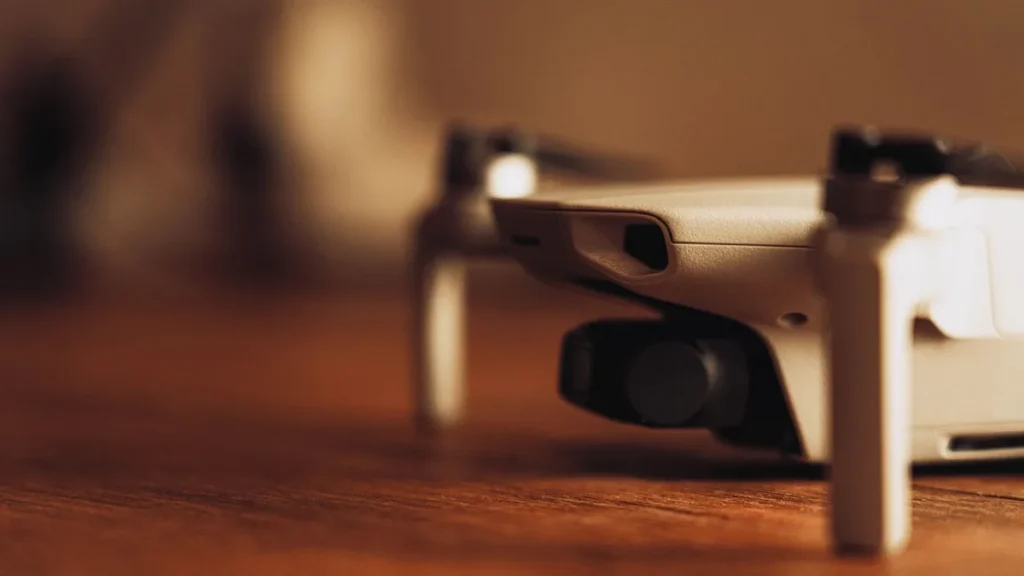
Do these on the kitchen table, before you go outside.
- Read the aircraft’s manual for the return-to-home behaviour. Not the whole manual. That section. Return-to-home (RTH) is the feature that saves the aircraft when you lose the signal or the battery runs low, and it only saves it if the RTH altitude is set higher than everything between the drone and you. The default is usually too low for anywhere with trees.
- Update the firmware. Aircraft, controller, and app. Do it at home on Wi-Fi, not in a field on a phone hotspot.
- Calibrate the compass away from metal. Not on a car roof. Not next to a steel fence. Not on rebar-reinforced concrete. A compass calibrated near metal is the single most common cause of the “flyaway” people describe online.
- Wait for a GPS lock before you take off. The app tells you how many satellites it sees. Take off with too few and the aircraft has no idea where home is.
- Check the battery percentage, and check the batteries are actually warm. In a Canadian winter, a battery at 100% that has been sitting in a cold car can drop to a critical warning within minutes of takeoff. Keep them inside your jacket until you fly.
Learn how to fly a drone: the first thirty minutes
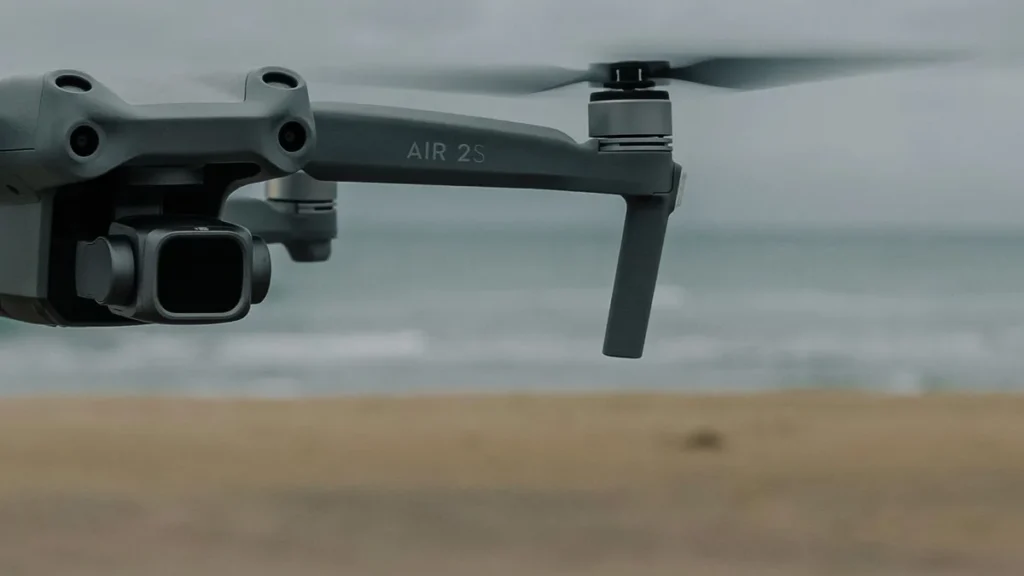
Find a wide open field with nothing to hit, no people, and no airport nearby. A sports field on a weekday morning is ideal. Then do this, in this order, and nothing else:
- Take off and hover at eye level for a full minute. Do not fly anywhere. Watch how the aircraft drifts, how it responds, how it sounds. Land.
- Take off again, climb to about ten metres, and fly a slow square. Forward, right, back, left. Keep the nose pointed away from you the whole time so the controls match what you see.
- Now do the same square, but turn the aircraft to face each direction as you go. Notice that when the nose points at you, the controls feel reversed. This is orientation, and it is the thing that catches everyone. Practise it slowly until it stops surprising you.
- Fly out fifty metres and bring it back. Watch how small it gets. This is what “visual line of sight” actually means in practice.
- Land where you took off. Then use return-to-home once, deliberately, from a safe distance, so you know exactly what it does before you ever need it.
That is the whole first flight session. Resist the urge to go higher, further, or faster. The pilots who wreck their first drone are almost never the ones who spent thirty boring minutes in a field.
The habits that separate pilots from people who used to own a drone
- Keep it in sight. Always. Not on the screen, in the air. The rules require it, and the screen lags behind reality in exactly the moments that matter.
- Land with a reserve. End every flight with 25 to 30 percent left. Batteries do not drain in a straight line, and the last 20 percent goes faster than the first.
- Respect wind at altitude. Calm at ground level can be a serious headwind thirty metres up. If the aircraft struggles to come home against the wind, descend, because wind is usually weaker lower down.
- Look at the sun. Flying toward a low sun means you lose sight of the aircraft. Position yourself so the sun is behind you.
- Check the weather like a pilot, not like a person. Learn to read a forecast for wind, visibility, and precipitation. If you want to go further, How to Read METARs for Drone Pilots teaches the aviation weather format the exam uses.
- Do a walk-around. Props tight, no cracks, gimbal cover off, battery seated, SD card in. Thirty seconds, every flight.
Where you are allowed to fly in Canada
This is the part that is different from a YouTube tutorial filmed somewhere else. The rules here are Transport Canada’s, and they hinge on one number.
Under 250 grams. No pilot certificate and no registration required. You still have to fly safely and stay clear of aircraft, people, and emergency sites, but there is no paperwork.
250 grams and up. You need a pilot certificate and the drone must be registered before it flies. Nearly every camera drone people buy for anything serious is in this bracket.
For a certified pilot flying under Basic operations, Transport Canada’s conditions are:
- Fly where you can always see the aircraft
- Stay more than 30 metres horizontally from any person who is not part of your operation
- Fly only in uncontrolled airspace
- Stay more than 5.6 km from the centre of a certified airport, and more than 1.9 km from the centre of a heliport
- Stay below 122 metres (400 feet) above the ground
- Stay away from emergency sites and away from advertised events
- Carry your pilot certificate with you when you fly
Fly closer to people than that, over people, or in controlled airspace, and you are in Advanced operations, which requires a different certificate and an in-person flight review.
Two tools make the airspace question answerable in the field. NAV CANADA’s NAV Drone app shows you controlled airspace and lets you request authorisation. The RPAS Wilco app runs the site survey a certified pilot is expected to do before every flight.
Registration is a five-minute job, but it is a separate step from the certificate. How to Register Your Drone in Canada covers it. And if you fly a small drone in Ontario, the Ontario Chinese-made drone rules are worth ten minutes.
When flying for fun turns into flying for work
There is a moment, usually a few months in, when someone asks if you would shoot their roof, their listing, or their job site. Say yes and you have crossed from hobby into commercial operation, and the rules do not care that you were being helpful.
Almost all paid work is Advanced operations. Near people, near buildings, often in controlled airspace. That means the Advanced certificate, which means the online exam and a flight review with a certified reviewer.
The certificate itself does not expire, and the flight review is required once. So the sooner you do it, the sooner you stop turning down work.
The whole pathway, including what it costs, is in Drone Flying Course Online in Canada. Our Basic and Advanced ground school is free.
A learning path that actually works
If you want structure, here is a sequence that gets a complete beginner to a certified Advanced pilot in about two months of part-time effort.
| Week | Do this |
| 1 | Set up the aircraft properly. Two or three thirty-minute field sessions, nothing but the drills above. |
| 2 | Add altitude and distance gradually. Practise nose-in orientation until it is boring. Fly in light wind on purpose. |
| 3 to 5 | Start ground school. Air law, airspace, weather, navigation. The Basic and Advanced courses are free. Keep flying. |
| 6 | Write the exam when the mock exams stop surprising you. The Advanced study guide covers what to expect. |
| 7 to 8 | Prepare for and book the flight review. The Flight Review Prep course is free, and the free live prep seminars let you ask a reviewer questions before you meet one. |
Want a structured start? Our Basic and Advanced ground school is free, start to finish. Pick your pathway or join a free live class and ask an instructor anything.
Frequently asked questions
Is it hard to learn how to fly a drone? The controls are not hard. Orientation and judgement are. A modern drone will hover itself; what it will not do is decide for you where the trees are, how much battery you need to get home, or whether you are allowed to be in that airspace. Those are the skills, and they come from slow, deliberate practice.
Do I need a licence to fly a drone in Canada? If the drone weighs 250 grams or more, yes. You need a Basic or Advanced pilot certificate and the drone must be registered. Under 250 grams, no certificate and no registration, though the safety rules still apply.
How high can I fly a drone in Canada? 122 metres, or 400 feet, above the ground, unless you have specific authorisation to go higher.
What should my first drone be? One you are not afraid to crash. Many pilots start with a sub-250 gram aircraft because it keeps them out of the certificate requirement while they learn, then move up once they are flying for work.
Can I fly a drone in my backyard? Often, but it depends on where the backyard is. If you are in controlled airspace, near an airport, or closer than 30 metres to a neighbour, a Basic certificate is not enough. Check the airspace before you assume.
How long does it take to get good at flying a drone? Competent in a few hours of deliberate practice. Confident in a few weeks. The certification, from zero to Advanced, is typically four to eight weeks part time.
Can I learn to fly a drone indoors? You can, but it teaches you less than you would think. Indoors there is no GPS, so the aircraft holds position with downward cameras and sensors, and it drifts over plain floors and in low light. That makes it good practice for smooth stick control and bad practice for everything else: wind, distance, orientation at range, return-to-home. Use a gym or an empty warehouse with the owner’s permission, fit prop guards if your model has them, and treat it as a winter supplement to field time, not a replacement.
What should I do if the drone stops responding or loses signal? Take your hands off the sticks for a second and read the screen. Most modern drones hover in place when the signal drops, then fly home on their own once the return-to-home timer runs out. That is why you set the return-to-home height before your first flight: the aircraft will climb to that height and fly a straight line back, and anything taller than that height in between is what it hits. If the signal comes back, fly it home yourself, slowly, while you can see it.
Why does my drone drift or fly away? Almost always one of three things. The compass was calibrated near metal, the aircraft took off before it had a solid GPS lock, or the wind at altitude was stronger than the drone could fight. The first two are fixed on the ground before takeoff. The third is fixed by watching how hard the aircraft is working as you climb, and coming down early if it is leaning hard into the wind just to hold position.
Can I fly a drone at night in Canada? Yes, if the aircraft carries lights that keep it visible and they are turned on. You still have to keep it in visual line of sight, so a dark field with no reference points is harder than it sounds. Learn in daylight first. Night flying is a skill you add once orientation is automatic, not one you learn alongside it.
Is a flight simulator worth it for beginners? For orientation, yes. A simulator lets you practise nose-in flight and tight turns with nothing to lose, and those are exactly the moments that crash real aircraft in week one. What a simulator cannot teach is judgement: wind you can feel, a battery that sags in the cold, a tree line that is closer than it looks. Use it to make the stick movements automatic, then take that muscle memory to the field.
How do I fly a drone in cold weather? Carefully, and in shorter flights. Lithium batteries lose capacity fast in the cold, and a battery that reads full on the ground can drop to a warning within a few minutes. Keep batteries warm until the moment you fit them, hover for thirty seconds after takeoff to let them warm under load, and plan to land with more reserve than you would in summer. Watch for ice on the props in freezing fog or drizzle, and bring the aircraft down the moment the handling changes.
What is the difference between Basic and Advanced? Basic covers flying in uncontrolled airspace, more than 30 metres from bystanders and never over people. Advanced covers controlled airspace, closer operations and flight over people. Basic is an online exam. Advanced is an online exam plus an in-person flight review with a certified reviewer. Our free Basic and Advanced pathways lay out each one step by step.
Do I need to learn manual mode to fly a drone well? Not at the start. Camera drones fly in a stabilised mode that holds position and altitude for you, and that is the mode you will use for almost all real work. Once you are comfortable, it is worth learning how the aircraft behaves when the GPS is weak and it starts to drift, because that is when a pilot who has only flown the assisted mode gets surprised. Practise that in a big open field, at a safe height, on a calm day.
Fly the boring way first
The people who become good drone pilots are the ones who were patient in the first week. Hover. Square. Orientation. Bring it home with battery to spare. Learn the airspace before you need it.
Then, when someone asks you to shoot their roof, you can say yes.
This is your moment.
Start free ground school · Join a free live class · Register your drone
A note on accuracy
Information in RPAS Centre blog posts is provided for general guidance only and reflects our understanding at the time of writing. Regulations, procedures, and operational practices change, so always verify requirements directly with Transport Canada, NAV CANADA, the relevant airport operator, or air traffic control before flying. Nothing on this blog constitutes legal, regulatory, or operational advice, and RPAS Centre is not liable for actions taken based on this content.
Spotted an inaccuracy? Please contact us.